How Exposed Are Roofers to AI? — The 2026 Risk Report
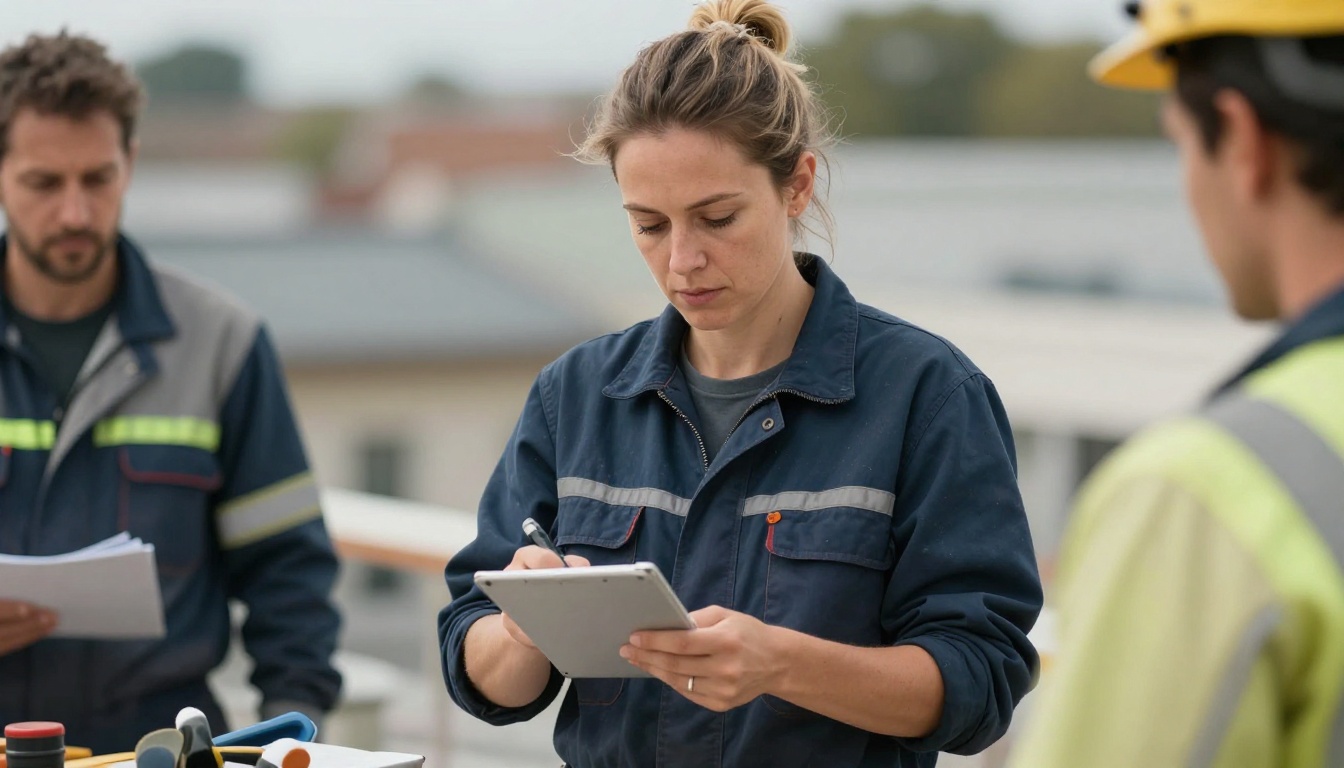
Cover roofs of structures with shingles, slate, asphalt, aluminum, wood, or related materials. May spray roofs, sidings, and walls with material to bind, seal, insulate, or soundproof sections of structures.
Data sources: O*NET 29.0, BLS OES. AI capability mapping updated March 2026. Task exposure does not equal full job replacement.
Key Statistics
- AI Risk Score
- 3% (low risk)
- Median Annual Salary
- $63,800
- Employment Growth
- +3%
- Total Employment
- 108,621
- Risk Timeline
- Minimal foreseeable impact
Risk Profile
- AI Exposure
- 3%
- Human Moat
- 9%
- Pivot Ease
- 0%
- AI Augmentation
- 45%
How exposed are Roofers to AI?
How much of this job can AI handle in each area (0% = no AI capability, 100% = fully automatable):
- Text & Language Processing
- 73.1%
- Data Analysis & Pattern Recognition
- 75.4%
- Visual & Creative Work
- 66.9%
- Code & Logical Reasoning
- 61.1%
- Physical & Manual Tasks
- 10.7%
- Social & Emotional Intelligence
- 8.1%
AI exposure dimensions for Roofers: Text & Language Processing: 73.1%, Data Analysis & Pattern Recognition: 75.4%, Visual & Creative Work: 66.9%, Code & Logical Reasoning: 61.1%, Physical & Manual Tasks: 10.7%, Social & Emotional Intelligence: 8.1%.
Key Tasks
- Inspect problem roofs to determine the best repair procedures.
- Remove snow, water, or debris from roofs prior to applying roofing materials.
- Set up scaffolding to provide safe access to roofs.
- Estimate materials and labor required to complete roofing jobs.
- Cement or nail flashing strips of metal or shingle over joints to make them watertight.
What AI can automate for Roofers
- Blueprint documentation
- Safety inspection checklists
- Material quantity calculations
What stays irreplaceable for Roofers
- Physical construction and skilled trade work
- On-site safety decisions
- Complex problem-solving on site
- Equipment operation in dynamic environments
- Crew leadership and coordination
Bottom Line
4% AI exposure — low automation risk (Anthropic, March 2026). BLS projects +3% growth 2024–34. Median $63K/yr (BLS 2024). Defend your human strengths: judgment stays irreplaceable.
Verdict: Defend
Not all Roofers face the same AI risk
Your title matters less than your task mix. Two people with the same job can have very different exposure. Lower exposure if you do more client-facing, advisory, or coordination work. Higher exposure if most of your day is repetitive digital output.
What the AI-resilient Roofers look like
This role already has strong human elements. The best roofers will strengthen their advantage by deepening interpersonal skills, leveraging physical presence, and becoming the person who checks and improves AI output.
What stays human for Roofers
The physical installation and repair of roofing materials require human dexterity and problem-solving skills.
Career pivot tip
Develop expertise in building envelope science and energy-efficient roofing systems for specialized roles.
What not to panic about
AI automates tasks, not your full professional value. Trust, judgment, responsibility, and context still matter deeply. The people most at risk are usually those who stay static. Using AI early often matters more than fearing it.
Roofers salary in 2026
Estimated 2026 salary: $66,000. Current median: $63,800. Growth outlook: +3% through 2033. Total employment: 108,621.
Your 3-move defense plan as a Roofers
As AI transforms the Roofers profession, developing complementary skills is essential. Focus on areas where human judgment, creativity, and interpersonal skills provide an irreplaceable advantage.
Can AI increase Roofers salary?
Current median salary: $63,800. Professionals who adopt AI tools early in this field can see significant productivity gains that translate to higher compensation.
AI tools every Roofers should know
- {'name': 'Drones', 'use_case': 'Roof inspection and damage assessment for safety and accuracy.'}
- {'name': 'AI-powered estimation software', 'use_case': 'Generating accurate cost estimates for roofing projects quickly.'}
- {'name': 'Predictive Maintenance Software', 'use_case': 'Predicting roof degradation and scheduling maintenance proactively.'}
What AI changes for Roofers
150-word analysis: Roofers face minimal AI exposure (3.8% risk) due to the job's highly physical nature (11% physical dimension). The occupation involves manual labor that requires hands-on installation, material handling, and on-site problem-solving—tasks where AI currently struggles to replicate human dexterity and situational awareness. While some AI tools assist with project estimation, drone roof inspections, and design visualization, the core roofing work remains largely resistant to automation. The moderate code dimension (61%) suggests some opportunity for tech adoption, such as blueprint software and project management apps. Roofers should focus on mastering modern roofing technologies like thermal imaging for leak detection, drone-based surveying, and sustainable material installation techniques. Building specialized skills in solar roofing and green construction will enhance job security as the industry evolves toward energy-efficient solutions. The 3% growth rate indicates steady demand, with opportunities strongest in regions experiencing extreme weather and housing market expansion.
Related Careers to Roofers
- Floor Sanders and Finishers — 3.9% AI risk
- Electricians — 3.5% AI risk
- Segmental Pavers — 3.4% AI risk
- Sheet Metal Workers — 4.2% AI risk
- Excavating and Loading Machine and Dragline Operators, Surface Mining — 4.3% AI risk
Explore more
- See all Construction and Extraction jobs
- Compare Roofers with Floor Sanders and Finishers
- Compare Roofers with another career
- 50 safest jobs from AI
- Most exposed jobs to AI
- High-pay, low-risk careers
- Browse all job categories
- How we calculate AI risk scores